A new shop sign can involve a few hundred pounds for a straightforward panel or several thousand for a larger illuminated installation. The price depends on the construction, size, artwork and the building it needs to fit.
A useful budget starts with the type of sign, then allows for access, preparation and installation. Comparing the headline price alone can hide important differences between quotations.
01 · Start with a planning range
Indicative UK market budgets for shop signs
These figures are broad UK market planning estimates, not Signmasta prices or measured national averages. They are intended to help set an initial budget. Allow for VAT where applicable and confirm design, fitting, access equipment, removal and electrical work separately.
| Type of sign | Indicative market budget | Main variables |
|---|---|---|
| Simple flat fascia panel | £300–£900 | Size, panel material, graphics and fitting |
| Non-illuminated sign tray | £600–£1,500 | Dimensions, construction, finish and fixing |
| Individual or raised lettering | £750–£2,000+ | Number of letters, size, material and depth |
| Illuminated signage | £1,200–£3,500+ | Lighting method, fabrication, access and electrical provision |
The ranges overlap because two signs described in the same way can involve quite different work. A small set of flat-cut letters is not directly comparable with large built-up letters containing lighting.
02 · Flat, folded or dimensional
Flat panels and sign trays set different starting points
A flat panel gives a rigid surface for printed graphics or cut-vinyl lettering. It can be a cost-conscious choice where the frontage and fixing method suit it. A sign tray adds folded depth and a more structured edge, but its size, material, finish and mounting still need specifying.
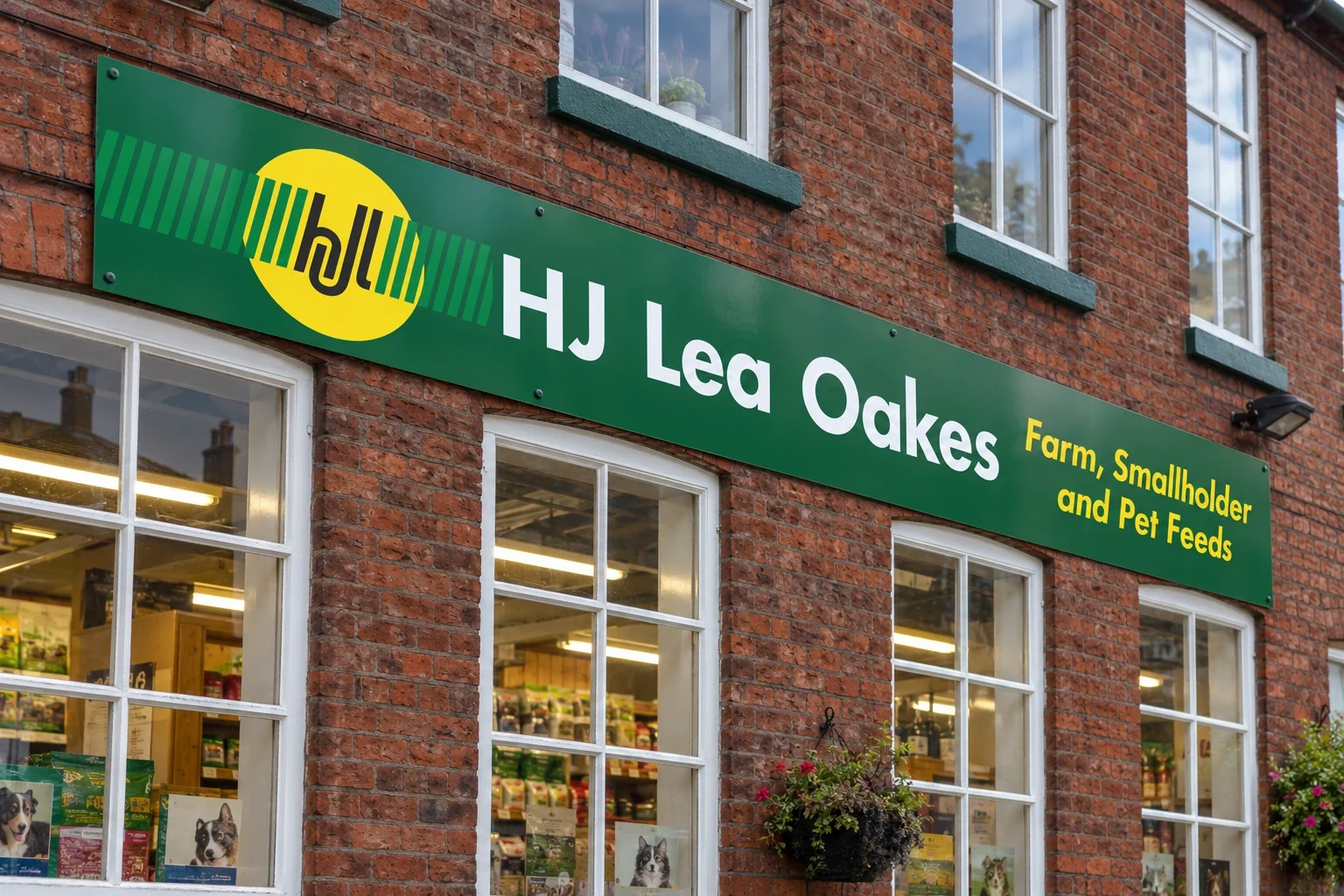
Ask whether the quote covers a new panel or tray, preparation of the background, graphic application, fixings and installation. Those details make comparisons much more useful than a sign description on its own.
03 · Letter count and detail matter
Raised and individual lettering changes the manufacturing work
Individual letters create a different appearance again, either fixed to a suitable background or combined with another sign construction. The length of the business name matters as well as the width of the frontage. More letters, greater depth, detailed shapes and specialist finishes can increase manufacturing and fitting time.
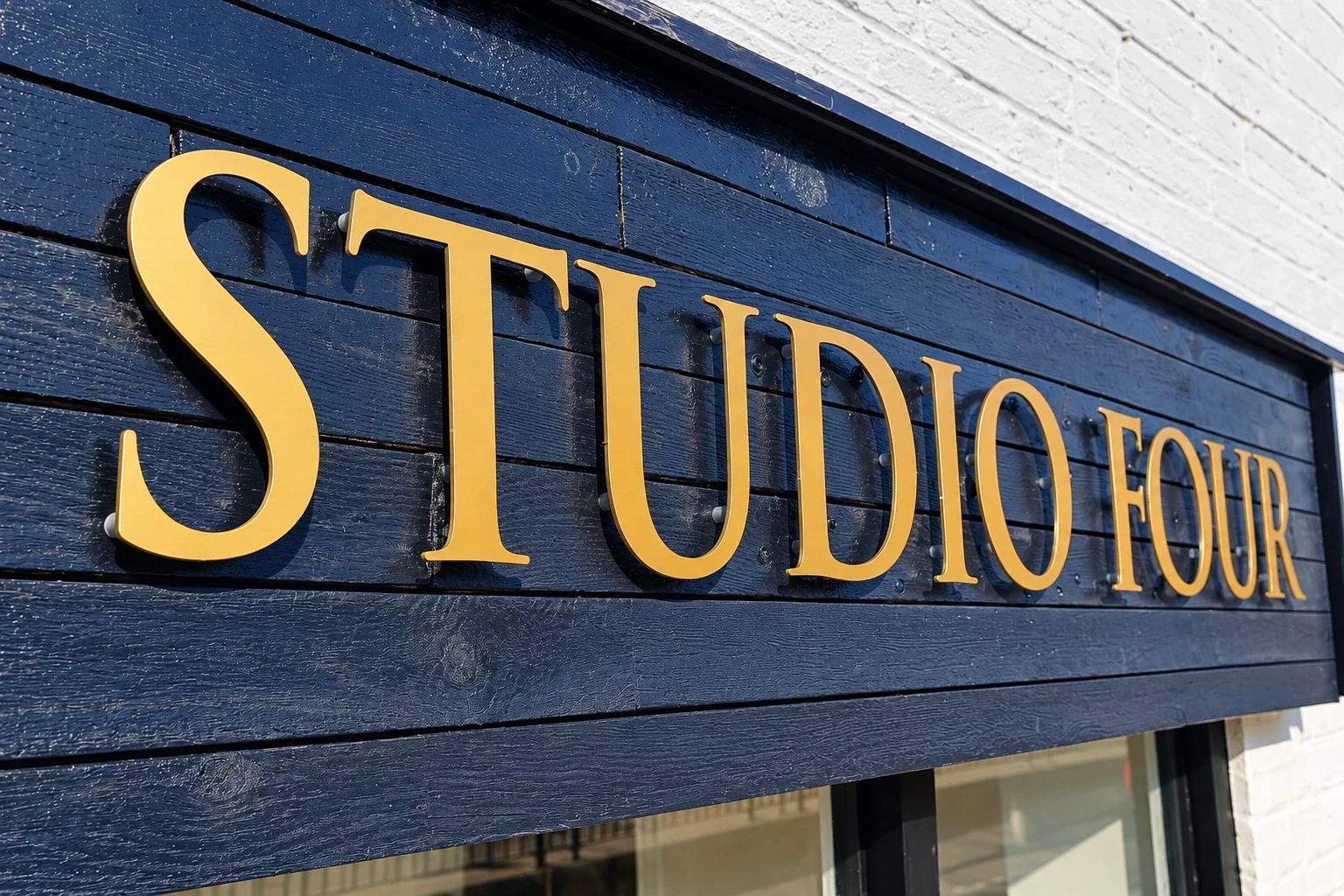
Flat-cut letters, thicker built-up letters and illuminated letters should not be priced as though they are interchangeable. Material, thickness, returns, spacers, templates and access all contribute to the final specification.
04 · The site is part of the job
The building and access can change the quotation
A sign must attach to a suitable structure. Existing boards, wall condition, hidden fixings and previous signage can affect the proposed approach. A straight-on photograph helps with an initial discussion, but a closer assessment may be needed before a final specification.
Height, restricted access and the space available below the sign can also affect installation arrangements. An easy-to-reach ground-floor fascia and a sign above a busy entrance should not be budgeted as identical jobs.
- Existing sign: say whether it needs removing and disposing of.
- Frontage: share approximate width and height, plus clear photographs.
- Access: mention canopies, traffic, parking limits or restricted fitting times.
- Deadline: include an opening date or handover date if one matters.
05 · Plan the whole lighting system
Illumination affects fabrication, access and electrics
Lighting changes more than the appearance. The sign needs an appropriate power arrangement, and responsibility for the electrical supply and connection should be clear in the quotation. Ask how the illuminated elements can be accessed for future maintenance.
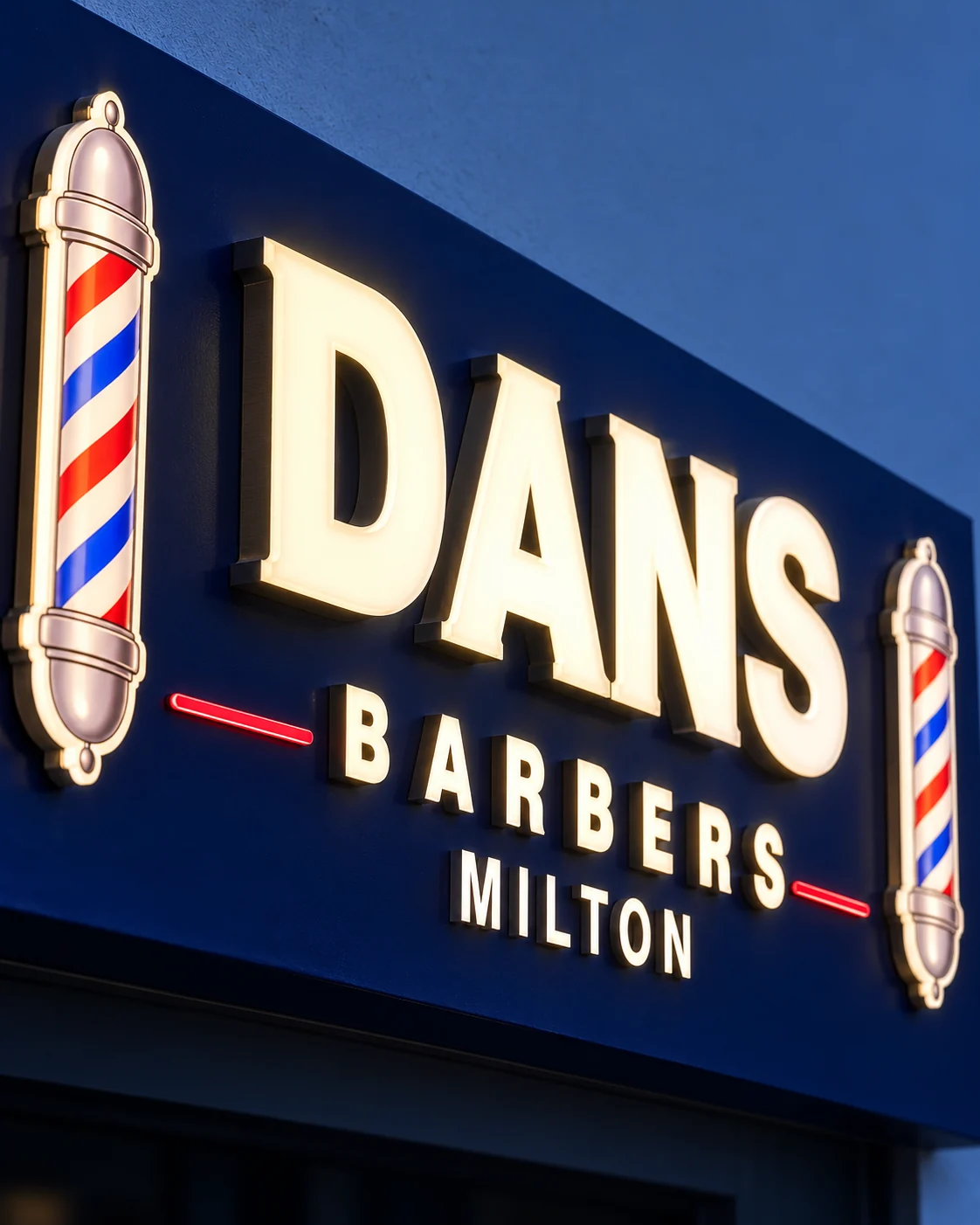
Consider when the sign needs to be seen and the surrounding light. Illumination should support a clear message and suit the location; it is not automatically the right choice for every frontage.
06 · Check before manufacture
Confirm permissions and approvals
For a site in England, check the proposed sign with the local planning authority to establish whether advertisement consent or another approval is needed. Requirements depend on the sign and its location. Obtain the relevant property owner’s permission too, particularly for rented premises.
Listed buildings, conservation areas, illumination and alterations to the shopfront can involve additional considerations. Resolve the position before approving manufacture rather than assuming every business sign has automatic consent.
Ask for a quote you can compare
Send a straight-on frontage photograph, approximate measurements, your logo, wording and any opening deadline. Explain whether an old sign needs removing and whether you want illumination.
When comparing quotes, check the proposed construction, finish, design work, installation, access equipment, removal, electrics, VAT and any exclusions. A cheaper headline number may simply cover a different scope.
Signmasta provides shop and business signage from Sandyford, Stoke-on-Trent, including flat fascia panels, sign trays, raised lettering and illuminated options. We can discuss a suitable starting specification and the information needed to price the job.