
Your van does not need to be covered from bumper to bumper to look professional. For many small businesses, a readable name, a short service description and clear contact details are a useful starting point. A larger graphic scheme makes sense when it adds something to that brief.
Lettering, partial graphics and full wraps are different ways to use the same vehicle. The best choice depends on the message, the van's colour and condition, and your budget for artwork, materials and fitting.
01 · A practical starting point
Van lettering: make the essentials clear
Cut vinyl lettering uses individual letters and shapes applied to the vehicle. It works well for a company name, a short description of the service, contact details and a suitable logo. The original paint colour remains part of the layout.
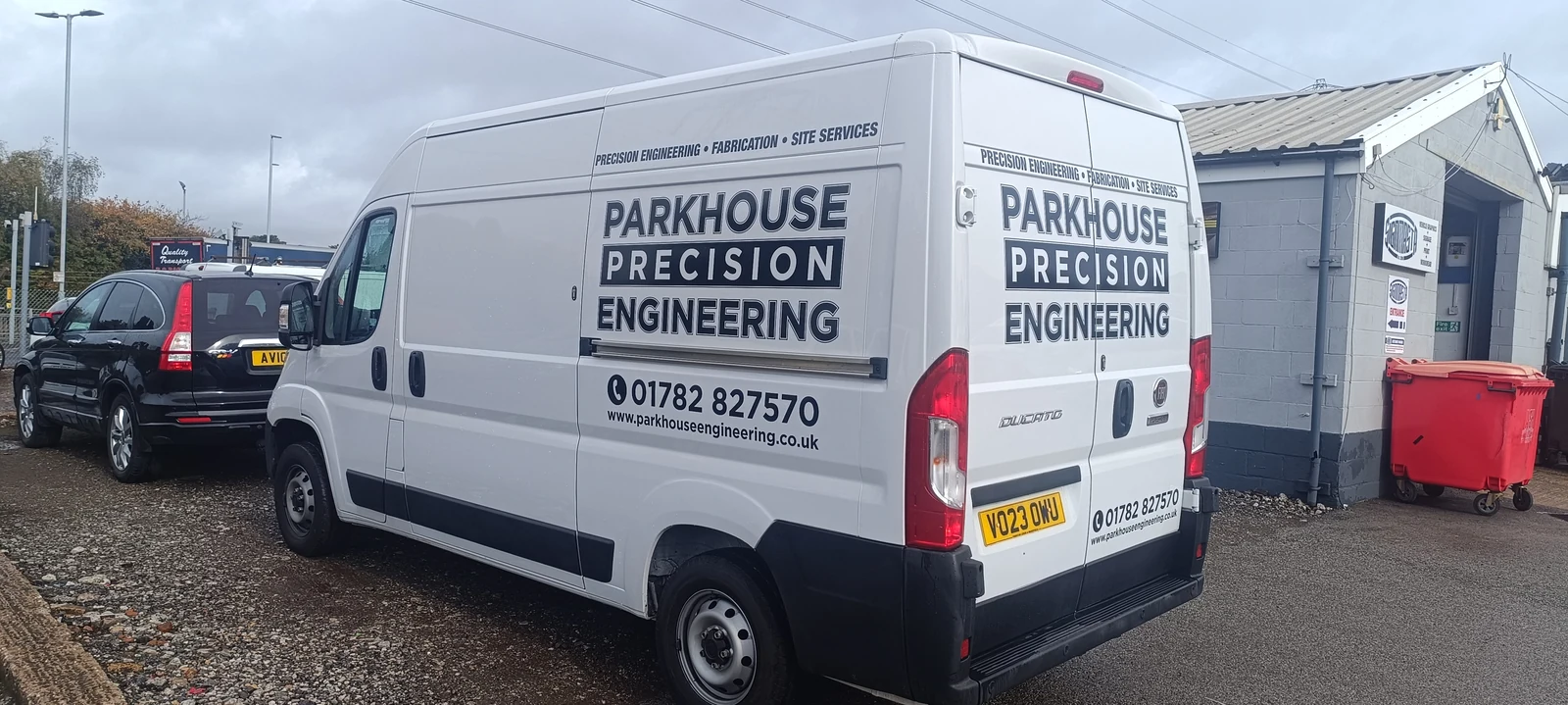
This Parkhouse Precision Engineering project shows a straightforward approach with a limited colour palette. The business identity and service information have room to read without filling every part of the bodywork.
Lettering is worth considering when your main aim is identification. Decide what someone needs to remember after a brief look: who you are, what you do and how to reach you.
02 · More impact without full coverage
Cut vinyl can do more than small lettering
A larger illustration or a distinctive shape can make a van memorable while still leaving much of the paintwork visible. The size of the design does not automatically make it a wrap.
For cut vinyl, the original paint colour remains the background. Larger lettering, logos and suitable illustrations can add impact without requiring full coverage. The material and fitting specification should be confirmed when comparing designs.
Detailed cut vinyl can involve considerable preparation and accurate fitting. A one-colour scheme is not automatically the cheapest option if it contains intricate shapes or spans several panels.
03 · A balance of coverage and budget
Partial graphics: use colour and imagery where they help
A partial scheme combines selected areas of graphics with the original vehicle colour. It creates space for building photographs, larger colour areas or a more connected layout across the sides and rear.
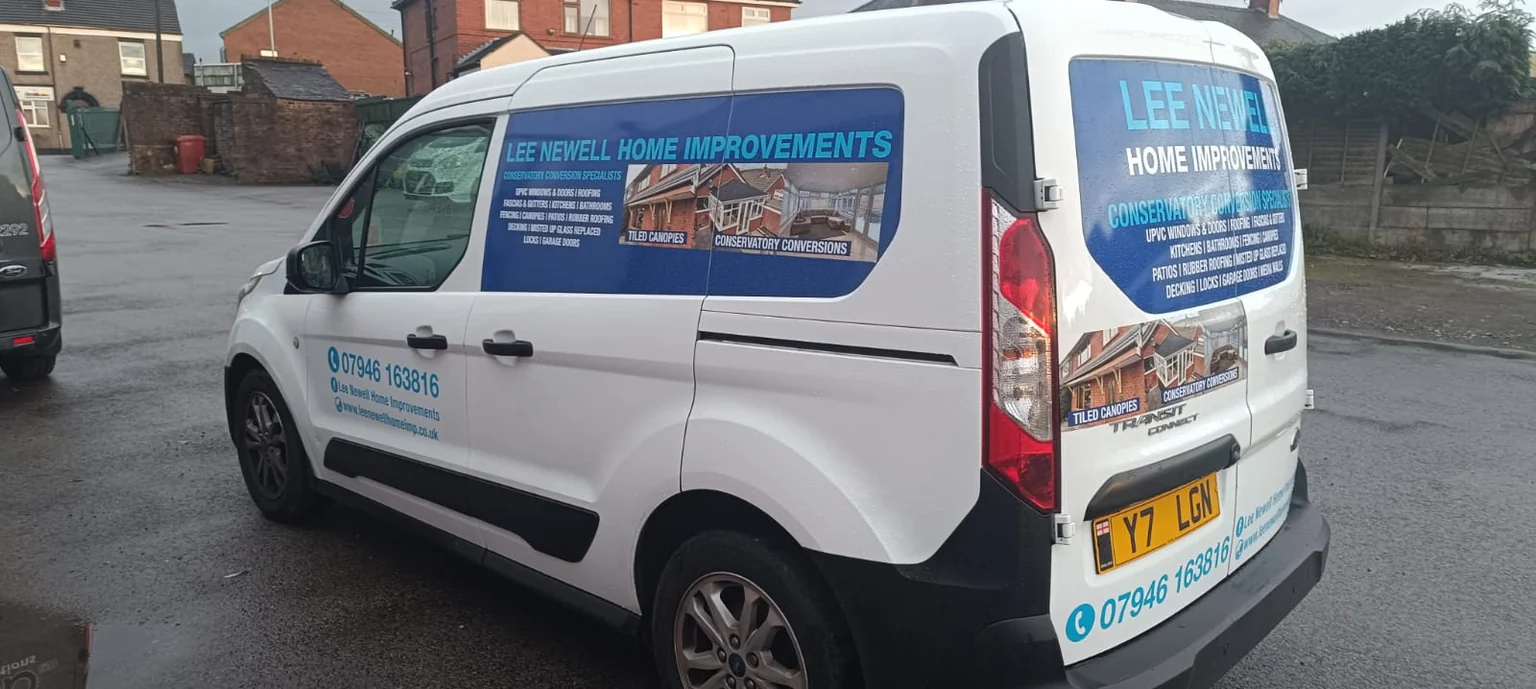
The Lee Newell Home Improvements van brings together project photographs, blue panels and business information. The graphics carry a strong identity while areas of the original white bodywork remain visible.
This approach can be a useful middle ground when lettering alone does not provide enough space for the design. Agree which panels are included: two quotations both described as a “partial wrap” may cover very different amounts of the van.
When is a full wrap worth considering?
A full wrap may suit a brief that needs a continuous background or extensive coverage. The Bin Guy vehicle below is a full-wrap example. It usually involves more material and installation work, so the extra coverage should have a clear purpose.
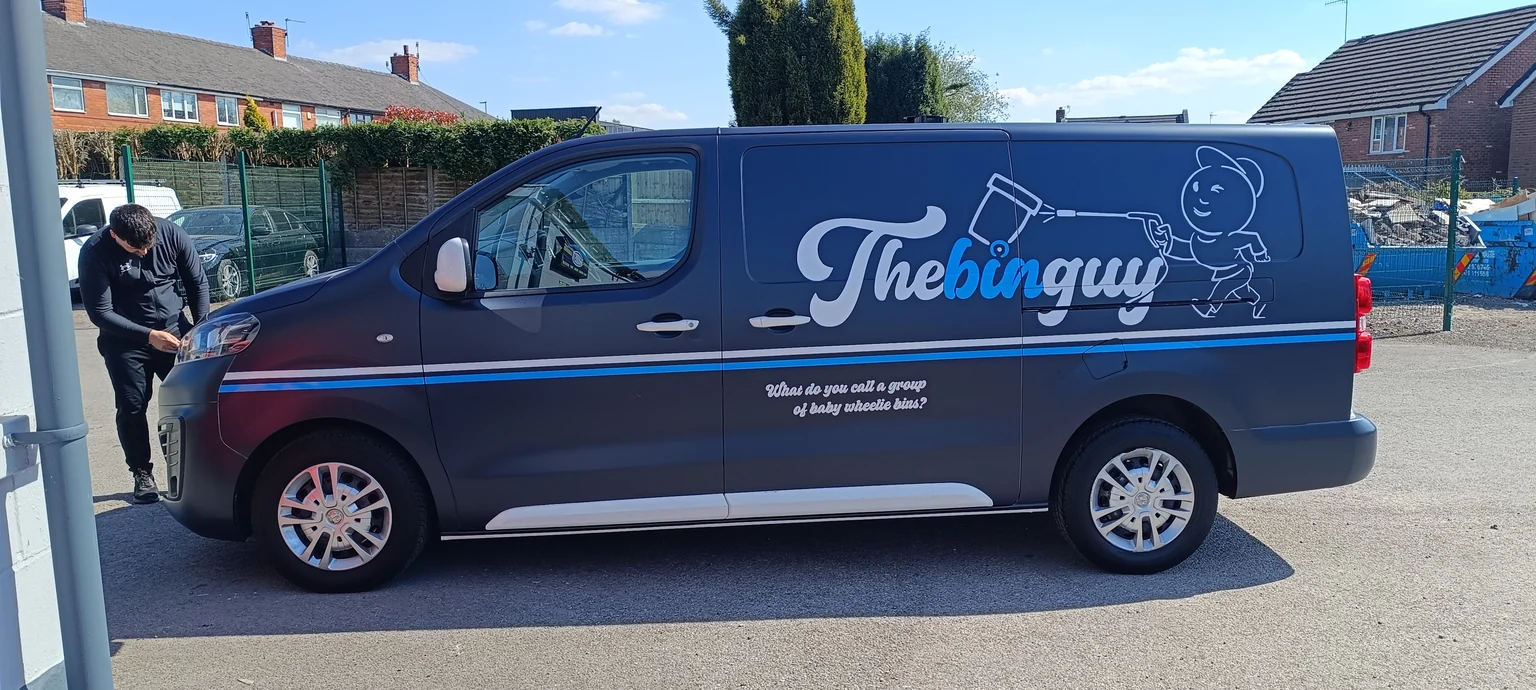
If lettering or partial graphics already communicate your business well, there is no need to choose a full wrap simply to fill the remaining space. Compare the message, the coverage and the budget first.
Choose the message before the coverage
Start with a short brief and compare options for the same vehicle and wording. Check how the name, service and contact details read at a distance, and how doors, handles and recesses affect the layout.
- Choose lettering when a clear name, logo and contact details do the job.
- Consider larger cut graphics when an illustration or distinctive shape adds useful character.
- Choose partial graphics when photographs or larger colour areas help explain the business.
- Consider a full wrap when the brief specifically benefits from continuous or extensive coverage.
Compare what is included in the quote
Ask about artwork preparation, materials, fitting, VAT and removal of existing graphics. Tell the installer about paint repairs or other surface concerns before agreeing the work. Coverage alone does not describe the whole job.
For indicative market budgets, read our 2026 guide to van signwriting costs. Those figures are general planning estimates, not a Signmasta price list or quotations for the projects pictured here.
Plan a scheme that suits your business
Send Signmasta photographs of both sides and the rear, your van's make and model, your logo and the information you want to include. Share your preferred budget and mention any existing graphics that may need removing.
We can discuss suitable vehicle graphics options and prepare a visual before production. Start with a clear, useful layout and add coverage where it helps.