
A work van has limited space and its audience often has limited time. Someone may see it parked outside a property, glance at the rear in traffic or walk past it on the high street. Your design needs to make sense in those everyday situations.
Start with three questions: who are you, what do you do and how can someone contact you? Once those answers are clear, decide what supporting information earns its place.
01 · Business identity first
Make your business name easy to recognise
Your name or logo should be prominent, with enough space around it to read as a complete element. A logo that works on a business card may need a different arrangement on a long side panel or a pair of rear doors.
Fine details and thin lettering can disappear at a distance. Rather than enlarging every part of the logo equally, discuss whether a simpler layout would keep the identity clearer on the vehicle.
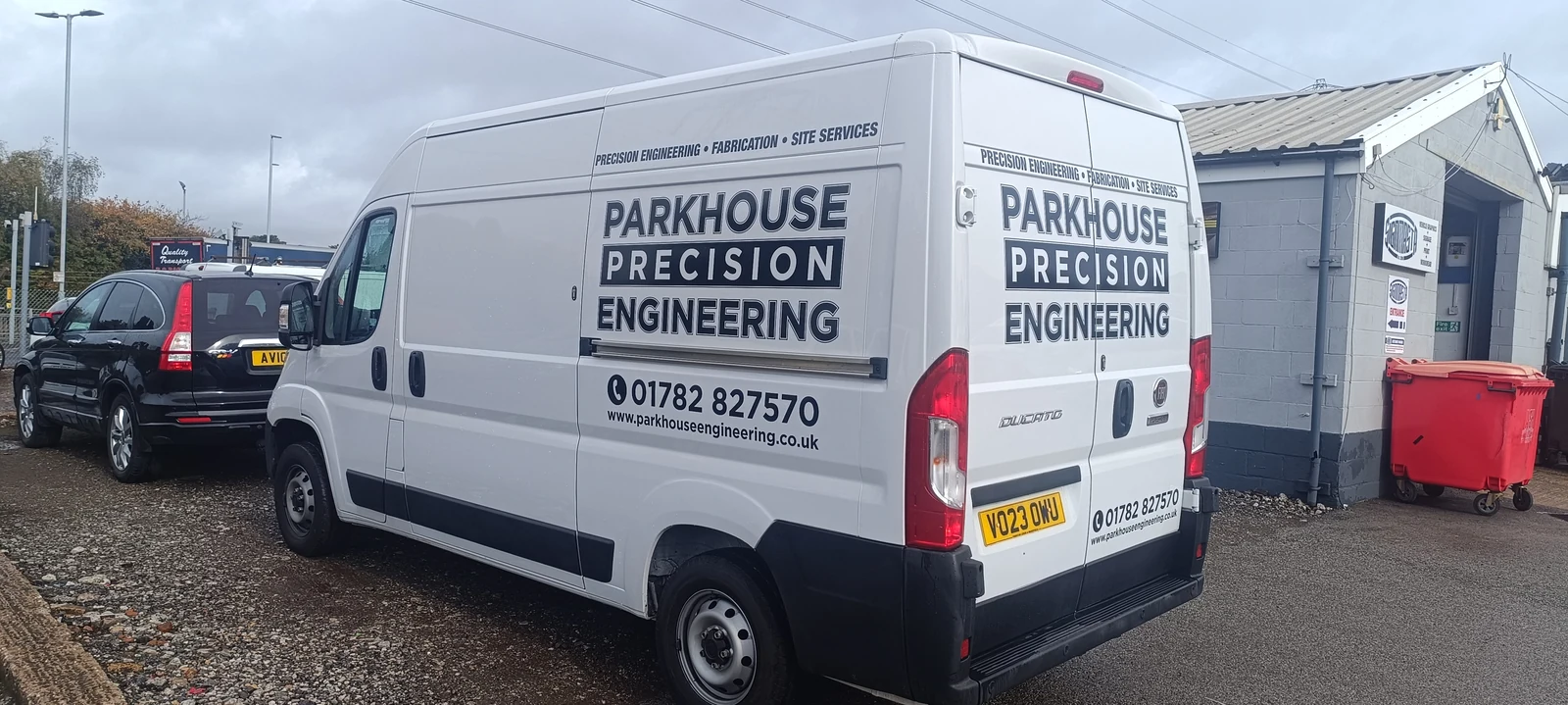
The Parkhouse van is a lettering example: the original white bodywork remains the background while the business identity and details sit clearly across the side and rear.
02 · A short, useful service message
Say what you do
A business name does not always explain the service. A roofer might use “Roof repairs and maintenance”, while a mobile tyre business could lead with “Mobile tyre fitting”. A short description makes the purpose immediately understandable.
Choose wording that a potential customer would use. If you offer several services, lead with the most important group and give secondary details less emphasis. An exhaustive list in small type is difficult to absorb.
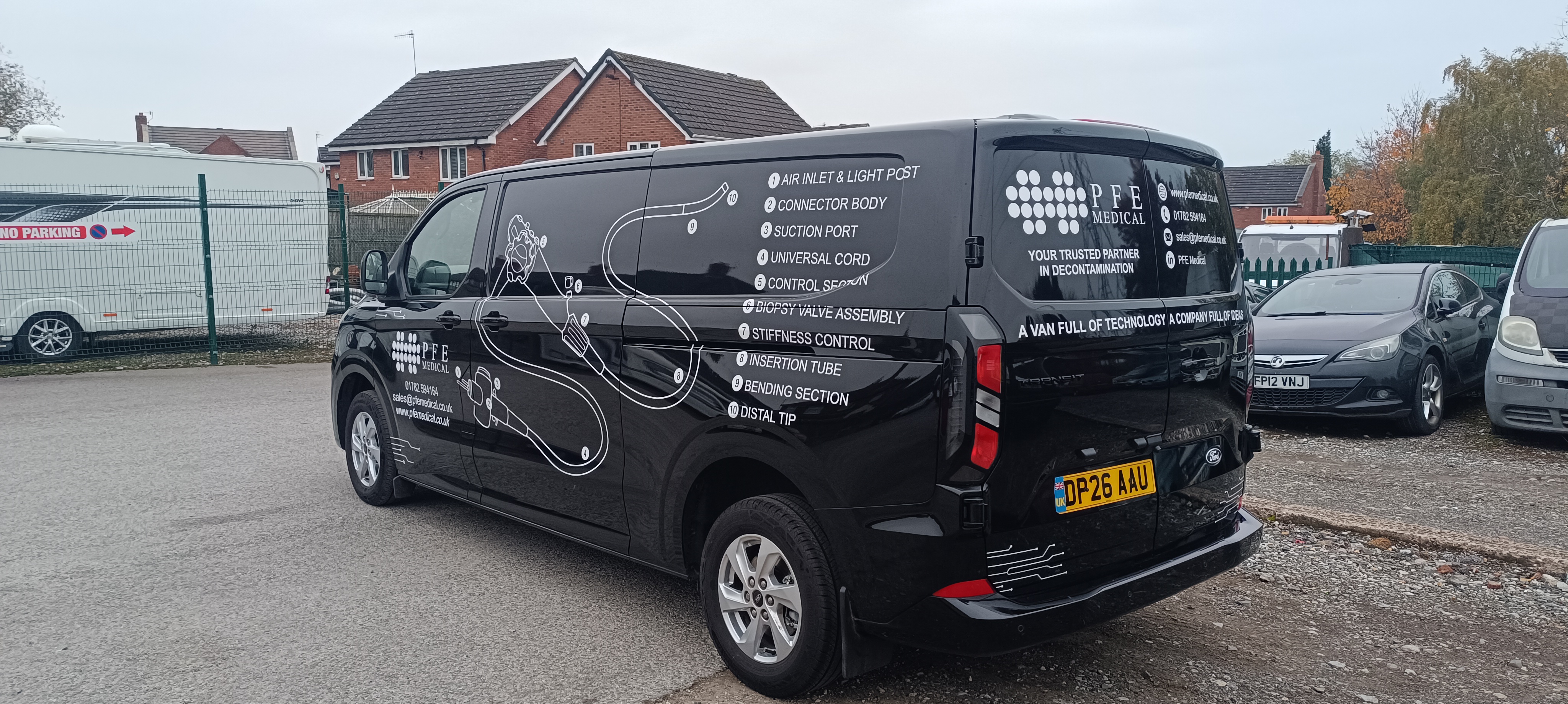
A strong visual can support the words, but it should not compete with the name or contact details. The PFE Medical van uses cut vinyl rather than a printed wrap.
03 · Make the next step obvious
Give customers a clear contact route
A readable phone number and a short website address are useful starting points. Make sure the details match your website, business cards and other signs.
A QR code can help someone standing beside a parked van, but it should support readable contact details. Keep clear space around it, test it at the intended printed size and do not make it the only way to reach you.
Social handles can be useful when they are short and actively used. If adding them makes the important information smaller, a website or phone number is usually the clearer choice.
04 · Design for real viewing conditions
Plan the sides and rear differently
The side panels offer space for a larger logo or graphic. The rear is often viewed by people behind the vehicle, so a clear service message and contact detail can be particularly useful there.
Doors, handles, recesses and windows interrupt the design. Place important words where they remain understandable when the vehicle is closed, and consider how sliding doors change the view. Flat artwork should always be checked against the actual van.
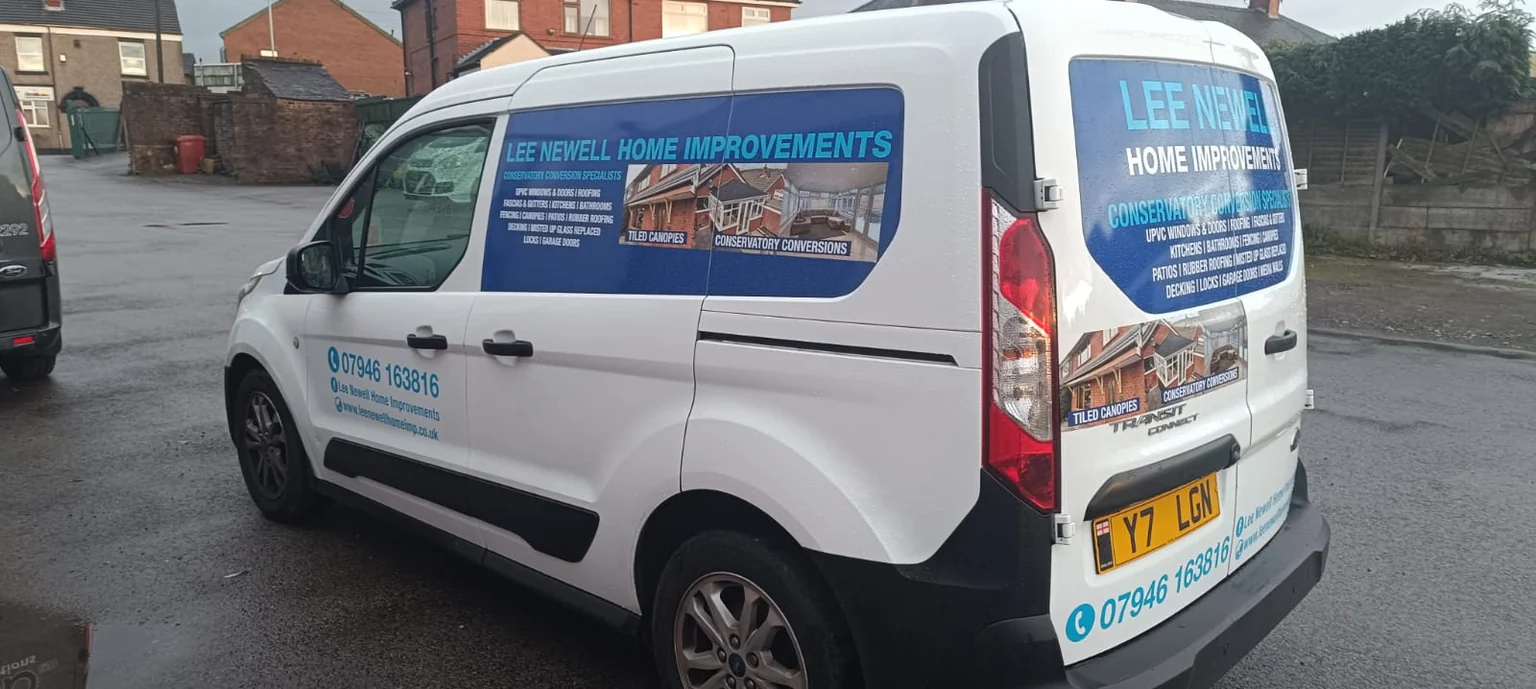
Lettering or partial graphics are often enough to create a professional, readable result. A full wrap may suit a brief that genuinely needs a continuous background or extensive coverage, but it is not required simply to make a van effective.
Use contrast and a clear reading order
Text needs to stand apart from the background. Avoid placing small wording over a busy photograph or mixing several competing type styles. A simple reading order helps: business identity first, service second and contact information next.
Colour can connect the van to your other branding, but using every available colour rarely improves clarity. A restrained palette can make the message easier to recognise.
05 · Check before production
Review the proof like a customer
Review the whole vehicle before concentrating on small details. Can you understand the business without zooming in? Then check every phone digit, spelling, web address and social handle.
Make sure any accreditation, membership or service claim is current and that you are entitled to display it. It also helps to ask someone unfamiliar with the artwork what they notice first. If they cannot describe your service, the information may need a different order.
- Name: is it the first or second thing you notice?
- Service: can a new customer understand what the business does?
- Contact: is there an obvious next step?
- Accuracy: have all numbers, URLs and claims been checked?
- Vehicle fit: do doors, handles, recesses and windows leave the message intact?
Turn your message into a practical vehicle layout
Send Signmasta clear photographs of both sides and the rear, your van’s make and model, your best logo file and the wording you want to include. Mention your preferred coverage and budget, plus any existing graphics or paint repairs that need assessing.
We can discuss suitable vehicle graphics options and prepare a visual before production. If you are deciding how much of the van to cover, compare lettering, partial graphics and full wraps. For general budgeting guidance, see our 2026 van signwriting cost guide; its figures are indicative market guidance, not a Signmasta price list.